A rooftop terrace can change how you use an apartment: outdoor meals, room to host friends and somewhere to enjoy the evening without leaving home. Its value depends on more than the view. You need a clear right to use it, practical access, a sound physical condition and an affordable maintenance plan. Start by treating the terrace as a distinct part of the purchase, with its own description, evidence and inspection. This guide is a preparation checklist; an independent lawyer should review the rights, and suitable technical professionals should assess condition and proposed alterations.
Establish what is being sold
Ask whether the terrace is included in the property being transferred, subject to an exclusive-use arrangement, or part of a shared roof. These descriptions are not interchangeable. Request the relevant contract wording, plan and any management or building documents, then have your lawyer reconcile them. The seller’s long-standing use of a space is not enough to settle the rights you will acquire.
Identify boundaries, access routes and any equipment serving other apartments. Ask whether management or neighbours need access for tanks, services or repairs. A space described as private may still require defined access arrangements. Record those arrangements before you plan furniture or assume that the entire roof can be enclosed.
Separate apartment area from terrace area
Request separate figures for the enclosed apartment and the terrace, with an explanation of how each is measured. If the listing gives one total, ask whether the outdoor area is included and whether common-area allocation forms part of the figure. Do not compare that total with another apartment’s internal area as though they measure the same thing.
Measure the space that is genuinely useful. Door swings, service equipment, narrow edges, circulation and access needed for maintenance can reduce the area available for daily use. Draw a simple furniture plan with room to walk around the table and open doors safely. A larger terrace is not automatically better if its layout leaves little comfortable, private space.
Inspect drainage and waterproofing with a specialist
Look for visible staining, cracked finishes, loose tiles, blocked outlets, standing water marks and previous patch repairs. Inspect the rooms immediately below where access is available. Photographs can help record findings, but they cannot establish the condition of hidden waterproofing or the cause of a stain. Ask a suitable building professional to assess concerns and explain the limits of a visual inspection.
Request information about previous leaks, repair work and warranties, including who carried out the work. Do not conduct a flood test, block drains or alter fittings during a viewing without an agreed professional procedure and permission. If a defect is identified, obtain a proposed repair scope and clarify who is responsible before relying on a cosmetic repaint as the solution.
Check shade structures and alterations
Ask what permissions support existing pergolas, roofing, glazing, partitions, outdoor kitchens or other additions. Have the relevant professional review the documents and physical installation where appropriate. An existing structure is not proof that future replacement or extension will be permitted. Obtain written management guidance before costing alterations.
Do not assume the roof can accommodate a hot tub, heavy planters, water tanks or other substantial loads. Suitability requires professional assessment of the exact structure, not a generic answer about apartment roofs. The same applies to electrical work and drainage changes. If your intended use depends on an alteration, make that feasibility question part of the purchase decision rather than a project to resolve after completion.
Test comfort at more than one time of day
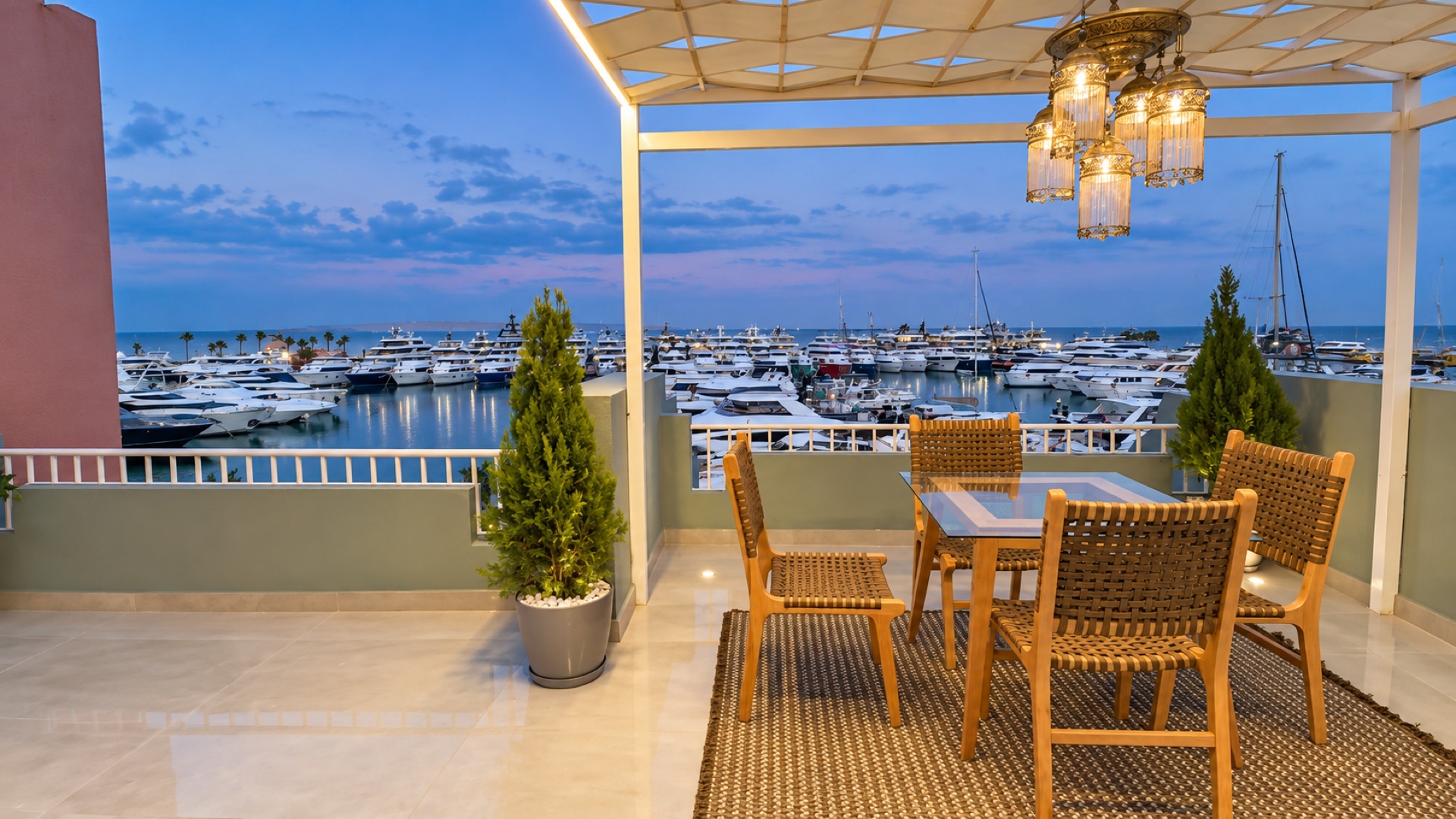
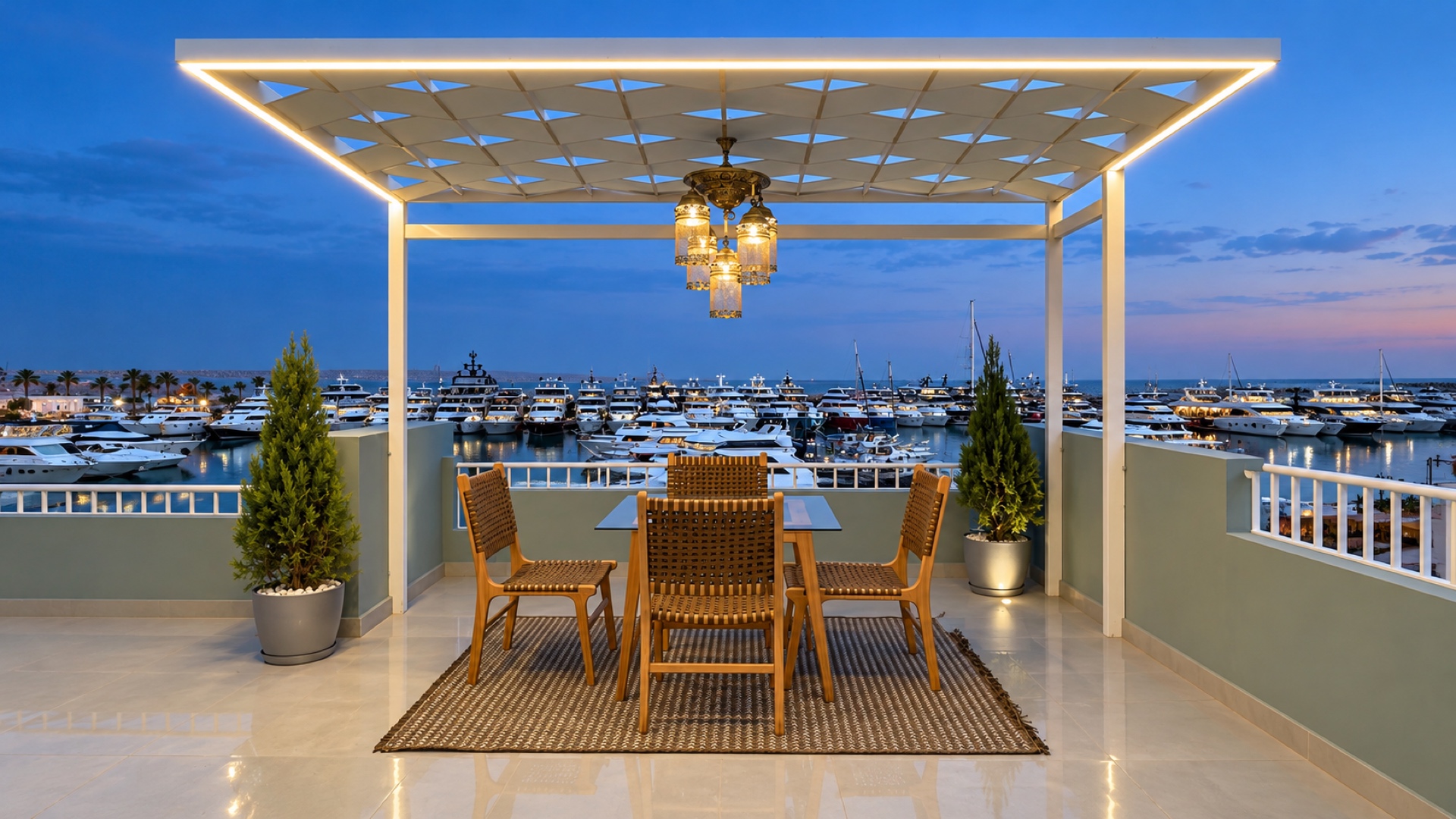
An evening photograph can hide a terrace that is difficult to use during the hours you prefer. Visit when you expect to have breakfast, work outside or host dinner. Note sun exposure, available shade, wind, reflected glare and privacy from neighbouring windows. Check whether you can carry food and drinks outside conveniently and return indoors without passing through a bedroom.
Think about the equipment that makes the space work: secure outdoor storage, appropriate lighting and furniture suited to its exposure. Ask a professional about safe installation where needed. Avoid judging only the decorative finish. A modest terrace with easy access and comfortable shade may serve you better than a large roof that requires substantial work before you can enjoy it.
Agree who maintains which part
Separate the terrace surface, waterproofing, structure, drains, railings, lighting and any shared services. Ask who arranges inspections, who pays for repairs and how access is managed if work affects another apartment. An exclusive-use arrangement does not automatically answer responsibility for every part of the roof. Have the relevant obligations explained from the actual documents.
Build a practical upkeep budget based on condition and professional quotations, not a universal annual percentage. Include cleaning, checking drains, maintaining exposed fittings and any planned replacement work. If a paid maintenance deposit is advertised, ask precisely which terrace-related items it covers. Keep that answer alongside the general building maintenance information.
Resolve red flags before paying a terrace premium
Pause the comparison if the terrace shown is absent from the plan, its access depends on another owner’s cooperation, or nobody can explain responsibility for a known leak. These are not reasons to declare every such property unsuitable; they are reasons to obtain evidence and professional advice before pricing the feature as secure value.
For example, a seller may describe a roof as private while the documents describe shared access. Ask your lawyer to establish the position and what can be agreed validly, rather than accepting a handwritten reassurance from someone without authority. If the answer remains unresolved, your decision should reflect that unresolved condition. A discount does not itself resolve a rights or safety issue.
- Terrace description, boundaries and rights match the purchase file.
- Enclosed and outdoor areas are separately understood.
- Condition, drainage and relevant permissions have been reviewed.
- Maintenance responsibility and necessary works are agreed.
Turn the checklist into a viewing request
Tell Harmony Properties how you intend to use the outdoor space and which checks you need arranged. For a real example, explore the featured Hurghada Marina apartment with a rooftop terrace, then request its current documents and area breakdown. The photograph is the invitation to inspect; the evidence determines what you can confidently include in your buying decision.
Continue Your Research
Compare the current properties for sale, review the available Red Sea projects, or explore the Hurghada area guides.
This article provides general property guidance and is not a substitute for independent legal, financial or tax advice about your circumstances.