
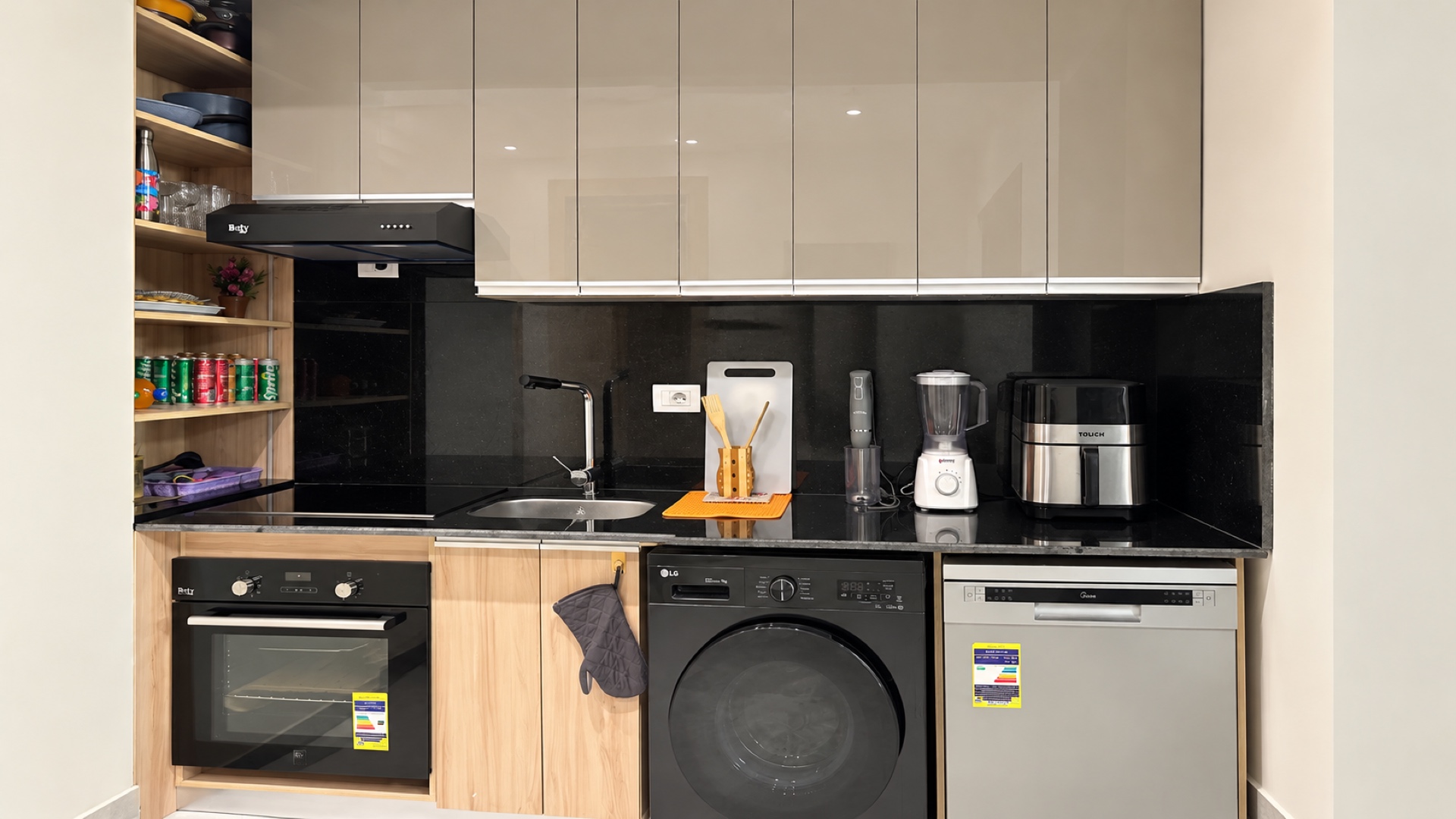
“Fully furnished” is a useful description, but it is not a complete agreement. A buyer may expect the television, coffee machine, curtains and terrace furniture to remain while the seller intends to remove some of them. The solution is a clear inventory, agreed before the final sale arrangements and checked again at handover. This guide focuses on defining what stays and in what condition. It complements our furnished-versus-unfurnished guide, which deals with choosing between the two purchase approaches.
Start with a complete walk-through
Work through the apartment in a fixed order: entrance, living room, kitchen, bedrooms, bathroom, storage and outdoor areas. Record every item that matters to the agreement, including fitted and freestanding items. Do not rely on an overall photograph or the assumption that low-value objects are unimportant; replacing many small essentials can still take time and money.
Give each item a simple reference such as K01 for the refrigerator or B02 for a bedroom wardrobe. Record quantity, location, a useful description and condition. Identify matching sets clearly: a dining table with four chairs is different from a table alone. Where relevant, record make, model and serial number without publishing those details in the public listing.
Use four clear categories
Mark each item as included, excluded, included subject to an agreed repair, or awaiting agreement. Avoid vague labels such as “most kitchen equipment” or “furniture as seen”. They leave room for different interpretations precisely where the parties need certainty. Once the agreement is final, no important item should remain in the awaiting-agreement category.
For example, “living-room television included; wall art excluded; bedroom air conditioner included after the agreed service” is more useful than “all furniture included”. If the seller intends to replace an item before handover, identify the proposed replacement and obtain the buyer’s agreement. Do not leave substitution to an undefined promise of similar quality.
Check appliances for function as well as appearance
With permission, test the appliances in a normal, safe way appropriate to the device. Check that the refrigerator cools, the washing machine can run an agreed test, the oven controls respond and the air-conditioning units operate. Ask a qualified technician to investigate faults or assess equipment where the result matters to your budget. Do not open electrical equipment or attempt repairs during a viewing.
Record what was tested, by whom and when. An appliance that was not tested should be described that way rather than marked working by default. Request available manuals, warranty documents, service records and remote controls. Ask whether any warranty can be used by the incoming buyer; possession of a receipt is not itself confirmation of transferable cover.
Describe condition without exaggeration
Use specific observations: a scratched tabletop, a loose wardrobe handle, a stain on the sofa, or a curtain track that does not move smoothly. A simple condition note is more useful than calling every item excellent. Photograph relevant wear close up and in the context of the whole item so that the image can be matched to the inventory.
For beds and upholstered furniture, assess cleanliness, odour and visible condition, and decide whether replacement is part of your own move-in plan. For fitted storage, test doors and drawers and inspect accessible interiors. If a condition issue changes the price or requires action, record that agreement explicitly instead of leaving it as a conversation remembered differently later.
Do not overlook small items and outdoor equipment
Confirm curtains, blinds, light fittings, mirrors, rugs, bedding, kitchen utensils and small appliances individually or as clearly counted sets. Clarify whether internet equipment belongs to the seller, a provider or someone else, and what account arrangements are needed. Keys, access cards and remote controls belong in the handover record even if they are not treated as furniture.
For terraces, specify tables, chairs, shade equipment and storage units. Check whether any item is fixed and whether removing it could leave damage requiring repair. Personal photographs, documents, medicines and private account details should be removed by the seller. Agree a safe reset or account-removal process for smart televisions and connected devices rather than passing personal accounts to the buyer.
Connect the inventory to the sale agreement
Ask your independent adviser how the inventory should form part of the transaction documents. Identify the property, parties, version date and accompanying photographs so there is one agreed set, not several inconsistent lists in messages. Record repairs, exclusions, replacements and who is responsible for completing them. Keep signed copies accessible to both parties.
If the parties allocate a value to the contents, make the basis clear and obtain appropriate professional advice about how it should be documented. Do not assume the seller’s original purchase cost is today’s resale value. The practical question is what you are receiving, its condition and the cost of bringing the home to your intended standard—not the number of objects visible in the listing.
Repeat the check at handover
Bring the final inventory and photographs to the handover. Check that included items are present, agreed repairs are complete and exclusions have been removed without unintended damage. Re-test important equipment where appropriate. Record any difference immediately, with dated photographs and an agreed next step; do not sign an unqualified acceptance of a condition you have not checked.
If someone attends on your behalf, give them the actual inventory and authority appropriate to their role. A representative cannot verify a missing coffee machine if they never received the list. Ask your lawyer how unresolved discrepancies should be handled under the agreement rather than improvising payment changes at the door.
- Room and item reference; description and quantity.
- Included or excluded; current condition and test result.
- Photograph reference; agreed repair or replacement.
- Responsible party; handover check and discrepancy record.
Ask for the inventory before you negotiate the package
When discussing a furnished home with Harmony Properties, request the proposed inclusions early. The Storia Del Mare two-bedroom resale provides a useful example of a furnished listing whose photographs can guide a room-by-room inspection. Use them to ask specific questions, then rely on the agreed inventory—not the photos alone—to define the sale. A clear contents agreement protects the move-in experience for the buyer and reduces avoidable disputes for the seller.
Continue Your Research
Compare the current properties for sale, review the available Red Sea projects, or explore the Hurghada area guides.
This article provides general property guidance and is not a substitute for independent legal, financial or tax advice about your circumstances.