
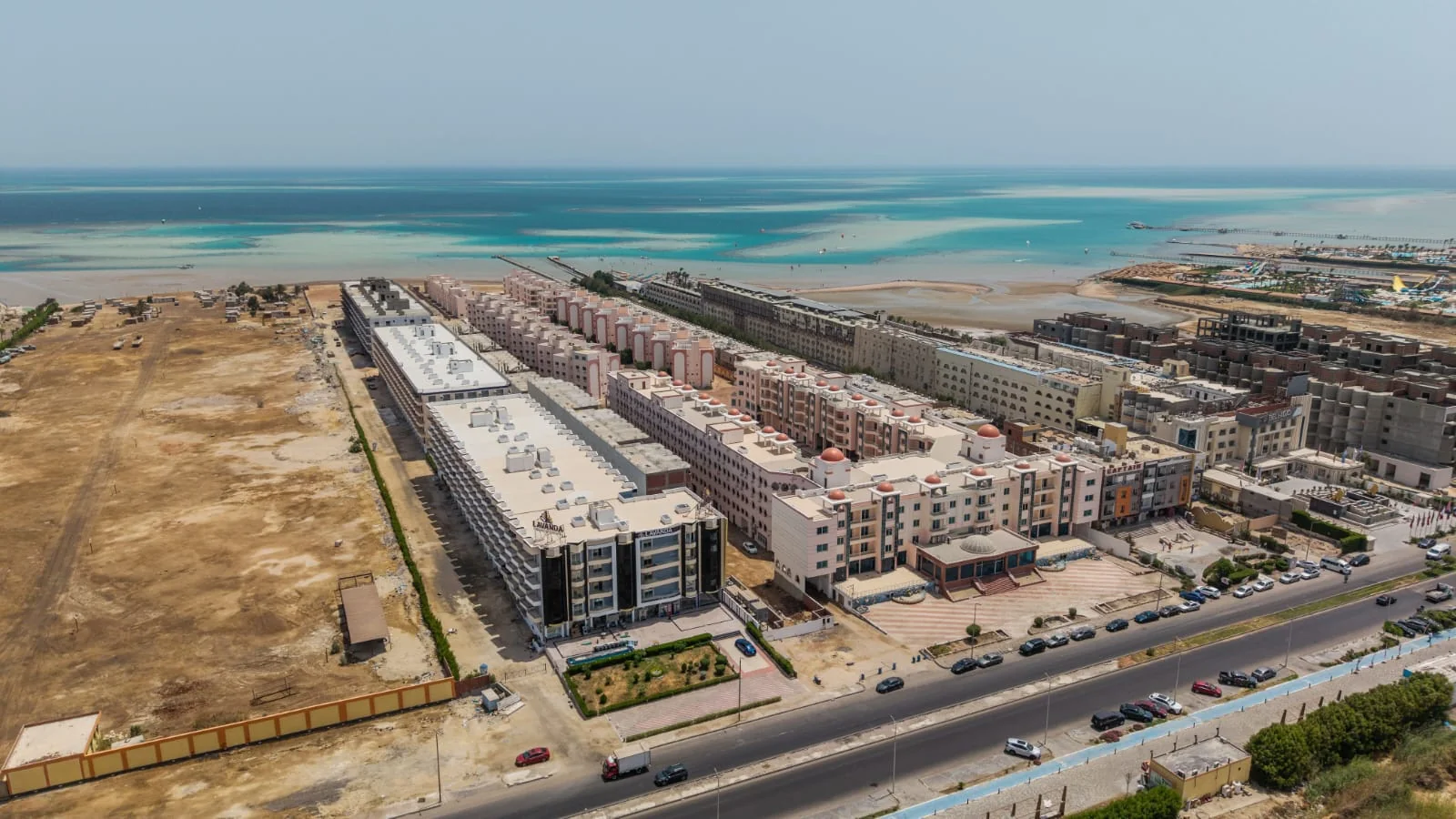
Lavanda Beach Resort’s identity begins with its position beside the Red Sea in Al Ahyaa. Al Arabia Development presents it as a beachfront project, and Harmony’s project material describes a community of approximately 19,000 square metres with pools and landscaped grounds. The appeal is the relationship between these shared spaces and the shoreline. A home in such a setting is experienced through more than its interior: the route outside, the places to sit and the rhythm of the resort all become part of daily life. This guide explains that wider environment without reproducing a sales release.
The coast is the organising feature
At Lavanda, the beachfront setting provides a natural destination for movement through the development. Residents may use the coast for a short walk, a period of relaxation or a longer leisure visit. These different uses make the connection between the residential buildings and the shore important. A beach that is part of the daily environment can be experienced very differently from one reached only through a planned outing.
The practical character of the shoreline should be understood separately from the project’s marketing images. Water conditions, the shape of the beach and the way services are organised affect actual use. The direct coastal location establishes the setting; it does not answer every question about swimming or hospitality. Lavanda’s strongest identity is therefore geographical first: a residential resort whose shared environment leads towards the sea. The service arrangements add another layer to that fixed physical relationship.
Al Ahyaa and a northern Hurghada routine
Al Ahyaa extends along Hurghada’s northern side. It is a distinct area, even when property descriptions refer to the nearby direction of El Gouna. Lavanda should be understood within its own district rather than borrowing the identity of another destination. The surrounding road network connects it with the wider city, while the resort supplies an internal leisure environment.
This setting can suit a routine in which time at home and by the sea forms a substantial part of the week. Trips to other areas then become specific outings rather than constant movement between activities. Some residents appreciate that pattern; others prefer the immediate street life of a more central address. The location question is therefore closely connected to how the home will be used. Lavanda’s appeal is clearest for someone who values the coastal environment itself, rather than treating it merely as a background to a city-based routine.
Pools offer a different way to spend time outdoors
The project information includes multiple swimming pools. These complement the beach rather than simply duplicating it. A pool setting can feel more contained, offer a different social atmosphere or provide a convenient alternative for a short period outside. The beach and pools may be used at different times by the same household, depending on what people want from the day.
The relationship between water areas and residential circulation influences comfort. A person returning home should not necessarily need to pass through the centre of every leisure gathering, while someone accompanying a swimmer may need a comfortable place to sit nearby. These ordinary movements help explain why the layout of shared space matters. At Lavanda, the combination of pools and sea gives residents more than one outdoor focus. The quality of the connections between them is part of the experience of the resort as a whole.
Landscaped grounds as lived space
Landscaped resort areas form another part of Lavanda’s description. Their value extends beyond creating an attractive view. They can help define routes, soften the transition between buildings and provide a setting for time outside that does not revolve around swimming. A resident may use such spaces briefly but often, especially during a longer stay.
There is a useful distinction between landscape that is seen and landscape that is used. A planted area beside a path contributes to a walk, while a seating space can become a destination in its own right. The availability of shade and comfortable resting points affects how long people stay. In a beachfront community, these spaces can also provide an alternative to the more active parts of the resort. Lavanda’s outdoor environment should therefore be read as several connected experiences, not as one uniform leisure area.
One resort can contain different stages
Harmony’s reviewed project record distinguishes an earlier delivered phase from later development within Lavanda. That is an important way to understand a resort that develops over time. The identity of the overall community may be continuous, while the completion and operation of particular buildings or facilities can differ by stage.
This does not require publishing a changing inventory to explain. It simply means that a photograph of one part of a resort should not be treated as a report on every other part. Completed surroundings can help a reader understand the character of the place, while later project imagery describes a proposed addition. Keeping these forms of evidence separate produces a clearer article and a more useful viewing. The relevant subject is how the resort functions as a whole at the time of a visit, including the relationship between established spaces and ongoing development.
Property services and periods away
Lavanda’s supplied project information includes property and rental services. These are relevant to a coastal home that may be used for only part of the year, but they should be understood as specific services rather than a guaranteed financial result. Caring for a home, arranging a visit and managing a guest stay involve different tasks and responsibilities.
For an owner, the useful value may be continuity between visits: a known contact, an agreed way to report issues and a clear record of what has been done. A rental arrangement, if chosen, has its own operational and financial terms. The presence of services in the project description does not define those terms automatically. Lavanda’s concept includes support around ownership, but the scope needs to be understood separately from the physical attraction of the beachfront location. This distinction helps keep the lifestyle discussion realistic.
The distinctive choice Lavanda represents
Lavanda represents a particular version of Red Sea ownership: a home within a seafront resort environment in northern Hurghada, with shared pools, landscape and a service layer around the property. The most useful comparison is with developments that offer a similar relationship between residential life and the coast. A city apartment or an inland lagoon community may be attractive for different reasons, but it supports a different pattern of use.
Our Al Ahyaa guide gives the wider area context, and the Lavanda project page brings together the resort’s own presentation. Readers can use both to understand the setting before considering individual homes. The enduring information is the location, the shared environment and the way the resort is organised. Those features remain useful to learn about even when sales releases, prices and individual property details change.
Project Presentation and Sources
Explore the Harmony project page
Project facts draw on material reviewed by Harmony and the linked presentations below. The editorial discussion explains design and lifestyle implications; it is not a site-inspection report.
Continue Your Research
Compare the current properties for sale, review the available Red Sea projects, or explore the Hurghada area guides.
This article provides general property guidance and is not a substitute for independent legal, financial or tax advice about your circumstances.


